The Future of Food Regulation: From Compliance to Control
The future of food regulation in England is becoming clearer.
Recently, the Food Standards Agency (FSA) outlined significant changes to how regulation will work.
However, what stood out most wasn’t the detail — it was the framing:
This is the “end of the beginning.”
In other words, this signals a fundamental shift — not just for regulators, but for how businesses manage compliance day to day.
Why the Current System Is No Longer Enough
The way we produce, sell and manage food has changed rapidly:
- Multi-site operators scaling at pace
- Delivery-first and digital-first models
- Increasingly complex supply chains
But many compliance systems haven’t evolved at the same speed.
As a result, the industry is now facing three key challenges:
👉 Gaps between what’s happening in operations and what’s visible to regulators
👉 Inconsistency across sites
👉 Reactive compliance instead of proactive risk management
The FSA has recognised this — and now the industry needs to respond.
What’s Not Changing — And Why It Matters
Despite the push for modernisation, some fundamentals remain critical:
- In-person inspections will continue
- The Food Hygiene Rating Scheme will remain central
In practice, this creates a clear challenge:
Businesses must modernise internally — while still performing externally under traditional inspection models.
The Real Shift: From Activity to Outcomes
The next phase of food regulation will focus less on process — and more on outcomes.
We’re moving toward:
- Greater national consistency
- Stronger local delivery
- Better use of compliance data
- Clear links to public health outcomes
Ultimately, this leads to one key point:
👉 You cannot deliver consistent outcomes without consistent systems
Technology and the Future of Food Regulation
As regulation evolves, manual processes will struggle to keep up.
At the same time, fragmented systems will make this even harder.
To meet future expectations, businesses need:
- Real-time visibility across sites
- Structured audits and scoring
- Centralised documentation
- Consistent risk assessments
- Clear action tracking and accountability
This is exactly where platforms like A Safer Risk come in.
By combining smart technology with expert support, businesses can:
- Standardise compliance across multiple sites
- Identify risks earlier
- Close gaps between policy and practice
- Move from reactive to proactive management
What the Future of Food Regulation Means for Food Businesses
For operators, especially multi-site businesses, expectations are shifting quickly.
The risks of standing still
- Inconsistent standards across locations
- Poor visibility of compliance performance
- Delayed responses to incidents
- Increased exposure during inspections
What leading businesses are doing differently
- Using digital checklists and audits to drive consistency
- Managing risk assessments and incidents centrally
- Tracking compliance performance in real time
- Embedding accountability across teams
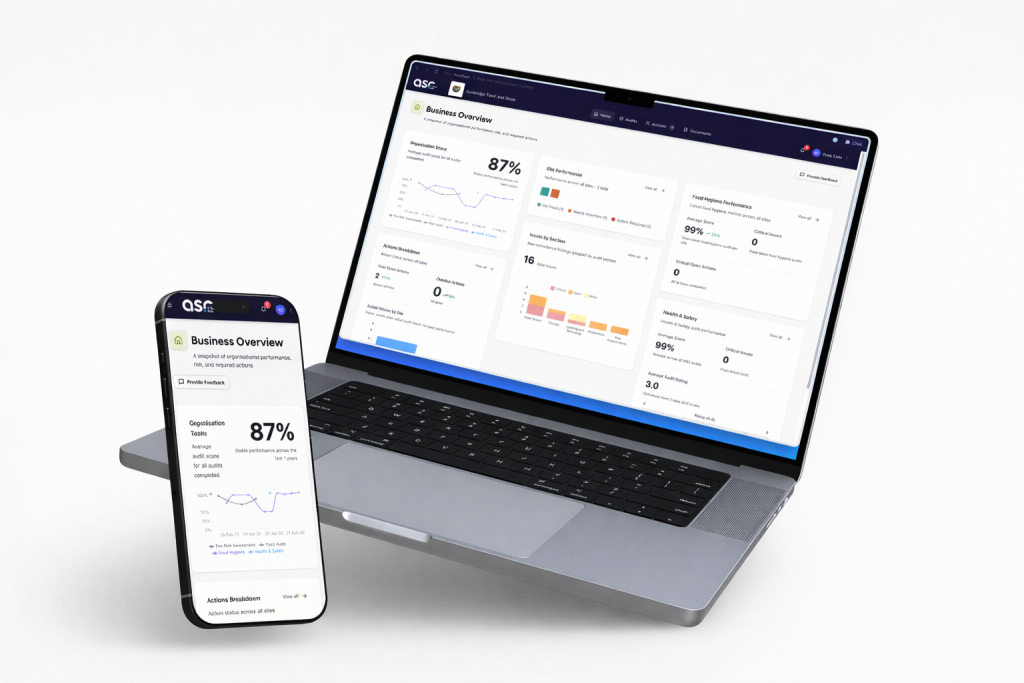
As shown in the platform overview, having all compliance tools in one place — from audits to dashboards — enables faster decisions and better control
From Compliance Drift to Compliance Control
One of the biggest challenges in food safety is “compliance drift” — where standards gradually slip between inspections.
This shift in regulation will expose this more clearly than ever.
The solution?
👉 Continuous visibility, not periodic checks
👉 Structured systems, not fragmented processes
👉 Data-led decisions, not assumptions
This is how businesses that invest early will gain a clear advantage.
What This Means for the Industry
For those working in food safety and health & safety, this is a defining moment.
We are moving from:
- Static compliance systems
- Periodic inspections
To:
- Dynamic, data-driven risk management
- Continuous oversight across sites
The role of compliance is evolving — from checking to controlling risk in real time.
Final Thought: The Businesses That Win Will Be the Ones That See Early
There isn’t a final model yet.
But the direction is clear.
The future of food regulation will be:
- More connected
- More consistent
- More outcome-focused
And the businesses that succeed will be the ones that:
👉 Build systems that scale
👉 Create real visibility across their operations
👉 Take control of risk — before regulators do
👉 If you’re thinking about how to stay ahead of these changes
Now is the time to look at whether your current approach truly gives you:
- Visibility
- Consistency
- Control
If not, it may be time to rethink how you manage compliance.
Take Control of Food Safety Compliance — Before It Becomes a Risk
The direction of travel is clear:
more visibility, more consistency, and higher expectations.
The question is — are your systems ready for that shift?
If you’re still relying on spreadsheets, disconnected processes, or reactive compliance, you may already be exposed.
See What Better Compliance Looks Like
With A Safer Risk, you can:
- Gain real-time visibility across all your sites
- Standardise audits, checklists and risk assessments
- Track actions and incidents in one place
- Identify risks early — before they become issues
- Move from reactive compliance to proactive control
👉 All in one simple, scalable platform designed for multi-site food businesses
Book a Free Compliance Review
If you’re unsure where your gaps are, start with a no-obligation compliance review.
We’ll help you:
- Identify risks across your current system
- Highlight gaps in visibility and consistency
- Show how you can improve — quickly and practically
👉 Get Started Today
📅 Book your free consultation
📩 Speak to our team about your current setup
Or contact Lucy, Commercial Director, directly:
📧 Lucy@saferfoodscores.co.uk
📞 01442 877322
Don’t Wait for Your Next Inspection to Find the Gaps
The businesses that succeed in the next phase of regulation won’t just be compliant —
they’ll be fully in control.