Why a Risk-Based Audit Approach is the Future of Food Safety Compliance
As food businesses grow, it becomes harder to maintain consistency across sites. A risk-based audit approach to food safety helps businesses manage this more effectively. Whether you manage restaurants, care homes, or multi-site operations, you need more than basic compliance. You need a clear way to manage risk.
The Problem with Traditional Audit Programmes
Most audit programmes follow a fixed schedule. For example, each site might be audited twice per year. This approach is simple. However, it doesn’t reflect how risk actually builds.
In reality, not all sites perform the same. Some locations are new. Others show repeated issues. Some struggle with consistency. Meanwhile, other sites perform well and carry low risk.
As a result, fixed audit models create problems. Teams spend time on low-risk sites. At the same time, higher-risk locations don’t get enough attention. Over time, the same issues keep appearing.
A Smarter Approach: Risk-Based Auditing
Instead, businesses can take a risk-based approach. This means adjusting audit frequency based on real data.
For example, you can look at:
- Site performance
- Recurring issues
- Operational risk factors
This approach focuses effort where it matters most.
What This Looks Like in Practice
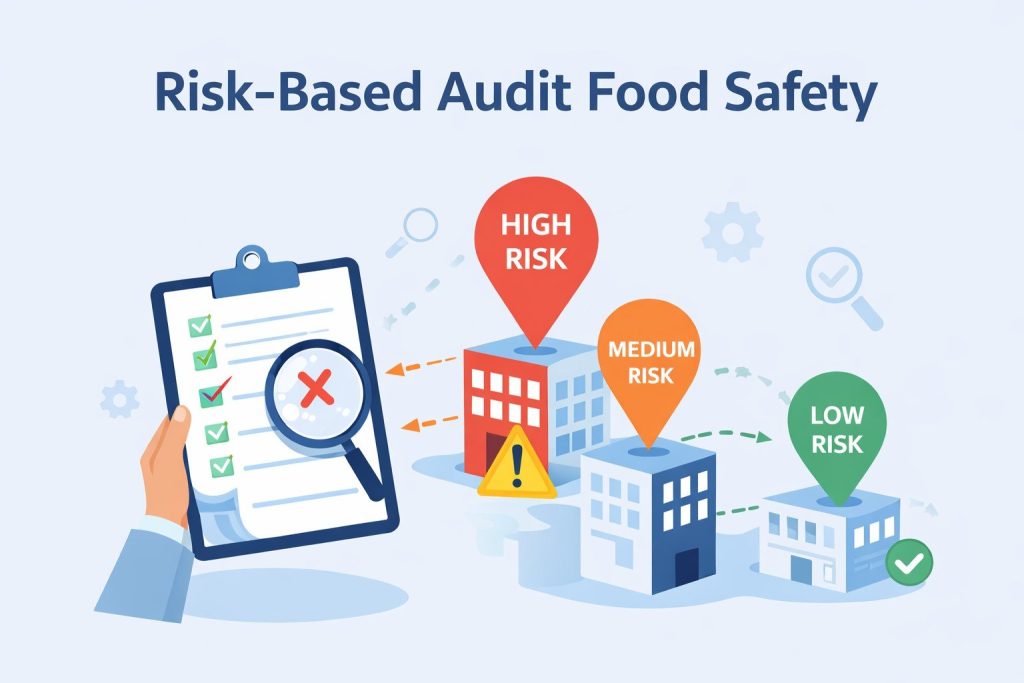
In a 20-site business, a risk-based model might look like this:
- 5 higher-risk sites audited quarterly (4 times per year)
- 10 medium-risk sites audited twice per year
- 5 lower-risk sites audited annually
Overall, the number of audits stays similar. However, the focus shifts.
In practice, this means:
- More support for struggling sites
- Less time spent on stable locations
- Better use of resource
Most importantly, the goal changes. You are not just auditing more. Instead, you are reducing repeat issues and improving standards over time.
Moving Beyond Audit Snapshots
Traditional audits often act as snapshots. They show what is happening at one moment. However, they don’t always show the bigger picture.
As a result, teams lack:
- Context
- Trend visibility
- Clear links between issues
Because of this, many businesses stay reactive. They fix problems after they appear instead of preventing them.
How Safer Risk Supports a Risk-Based Approach
This is where Safer Risk makes a difference. Instead of treating audits as separate events, the platform connects audits, incidents, and actions across all sites.
As a result, you can:
- Identify recurring issues across locations
- Spot trends earlier
- See where risk is increasing
- Prioritise audits and support
In practice, this creates a more complete view. You move from isolated audits to a connected system.
A More Scalable Model for Growing Businesses
As businesses expand, operations become more complex. Therefore, consistency becomes harder to maintain.
Traditional audit models struggle to keep up. However, a risk-based approach scales more effectively.
It allows you to:
- Focus resource where it has the most impact
- Reduce operational risk
- Maintain standards across all sites
Final Thoughts
Food safety should not be about ticking boxes. Instead, it should focus on managing real risk.
By using a risk-based audit approach to food safety, businesses can move from reactive compliance to proactive control. Over time, this leads to better outcomes and stronger standards.
Want to Learn More?
If you want to improve visibility and manage risk more effectively, Safer Risk can help.
Get in touch to request a demo to learn more.
Learn more about food safety standards from the
https://www.food.gov.uk/